How to Hire a Set Designer for Your Production
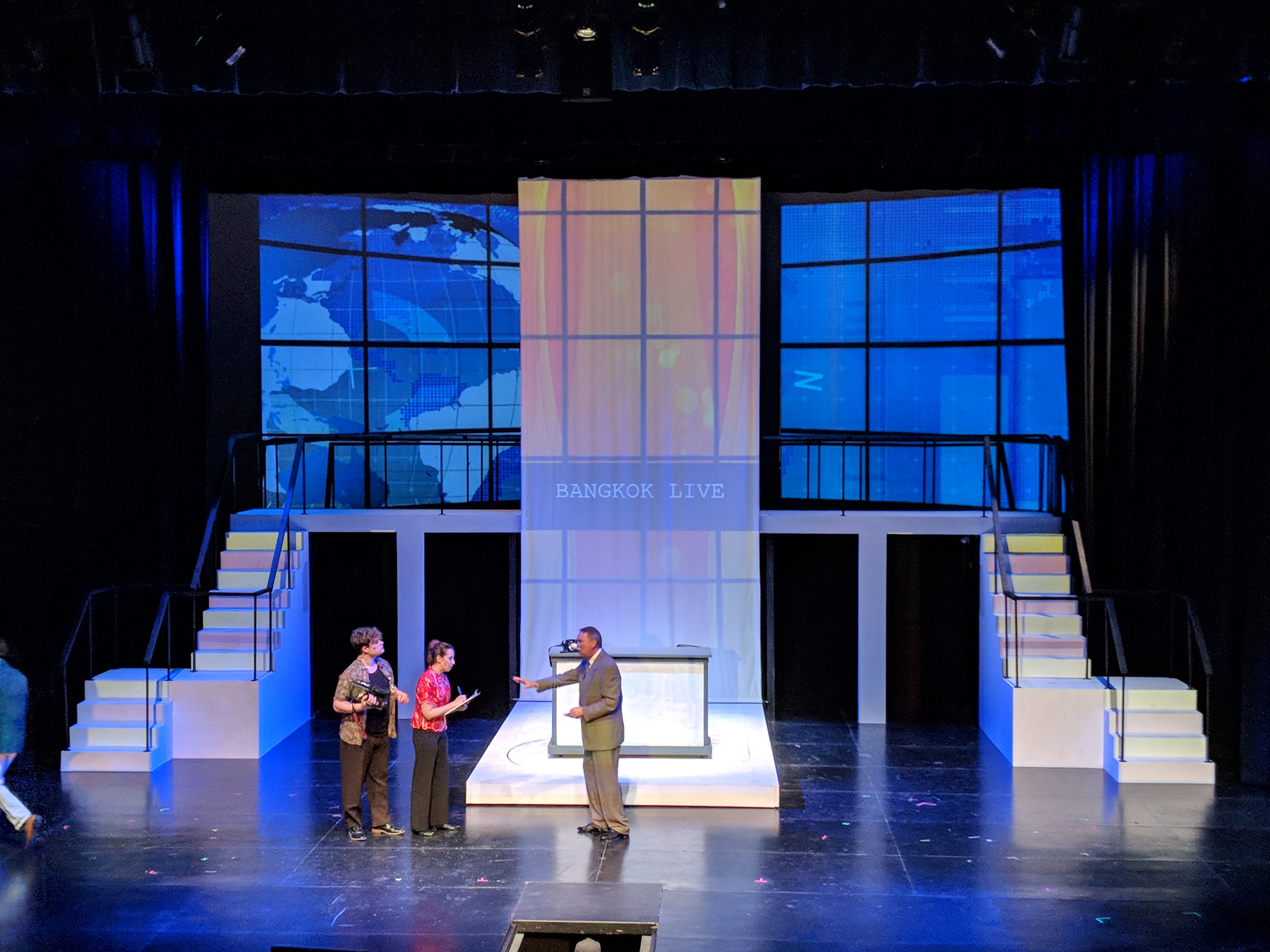
If you are trying to hire a set designer for a play, the most important thing is not finding someone who can draw a beautiful room.
You are looking for someone who can understand the story, work with a director, design for your actual theatre, stay inside the realities of the production and communicate clearly with the people who have to build it.
The portfolio matters. So do the conversations around it.
A designer can have excellent work and still be wrong for your production. Another designer may not have worked on a show exactly like yours, but may have the imagination, technical understanding and working style you need.
Here is what I would look for.
Hire the designer early enough to design
The set affects almost every other part of a theatre production.
It affects entrances, blocking, lighting positions, projection surfaces, props, furniture, scene changes, backstage traffic and sometimes costumes. It also affects how the shop spends its time and money.
That is why it is better to hire a scenic designer before rehearsals begin, or at least before the director has permanently staged the entire show around a set that does not exist.
The exact timing varies. A large professional production may begin design conversations many months before opening. A school or community-theatre production may work on a much shorter schedule.
Either way, the designer needs time to:
- Read and research the play
- Meet with the director
- Measure or study the theatre
- Develop and present concepts
- Get feedback
- Revise the design
- Coordinate with other departments
- Produce the necessary drawings
- Answer questions during construction
If the shop is ready to start building next week, you are not really giving the designer time to design. You are asking them to produce an emergency.
Sometimes that is unavoidable. Theatre is full of emergencies. It just should not be the original plan.
Start with the right kind of portfolio
When you are trying to find a set designer, do not look only for the biggest or most expensive-looking productions.
Look for evidence that the designer can solve different kinds of problems.
A useful portfolio shows complete stage pictures, but it should also help you understand the designer's thinking. I like to see some combination of sketches, models, renderings, ground plans, paint elevations, production photographs and different views of the same show.
The finished photograph tells you what eventually reached the stage.
The earlier work tells you whether the designer can communicate an idea before it exists.
Look at how the designer uses space. Do the actors have clear places to play? Does the scenery create useful stage pictures? Is there a strong visual idea, or is the set simply a collection of walls and furniture?
I would also look for range.
That does not mean the designer needs to have done Shakespeare, a musical, a contemporary drama, an opera and six kinds of children's theatre. It means you should be able to see that they are responding to the production rather than repeating the same design with different wallpaper.
Ask what they actually did
Portfolio photographs can be misleading if you do not know the designer's role.
In some productions, the scenic designer creates the concept and design drawings, then a separate technical director or scene shop works out how everything will be built. In other productions, especially at schools and smaller theatres, the same person may design, draft, build, paint and install most of the scenery.
Neither model is automatically better. You simply need to know which one you are hiring.
Ask the designer what they were responsible for on the projects you are viewing.
Did they create the original concept?
Did they produce the drawings?
Did they select or design the furniture?
Were they responsible for scenic painting?
Did another company engineer or fabricate the set?
This is not an interrogation. It is a way to understand their experience and whether it matches your production structure.
Discuss the director relationship
A scenic designer and director need to be able to develop an idea together.
The director should bring an interpretation of the play, staging needs and an understanding of the characters. The designer should turn that conversation into a physical world while also bringing ideas the director may not have considered.
You do not want a designer who ignores the director and disappears for three weeks to create whatever they personally find interesting.
You also do not want someone who contributes nothing and simply waits for the director to describe every wall.
During an interview, ask how they normally begin a project. Ask what they want from the director. Ask how they present early concepts and handle feedback.
You are listening for collaboration, but also for a process.
A good working relationship does not mean everyone immediately agrees. It means they can discuss the disagreement and identify what the production actually needs.
Ask about the builder relationship
One of the best questions you can ask is how the designer works with the lead builder, technical director or scene shop.
The design cannot live separately from the people building it.
A strong designer should be willing to discuss materials, construction, schedule, labour and budget before the design becomes too fixed. They should be able to listen when a builder identifies a genuine problem.
At the same time, the designer should be able to protect the important parts of the concept. If every difficult element disappears the first time someone raises a concern, the design may slowly lose the reason it existed.
The best relationship is a real collaboration.
The designer explains what matters visually and dramatically. The builder explains what the shop can execute safely and efficiently. Together, they find the smartest version of the idea.
If you do not have a lead builder yet, tell the designer. That may change the scope of the job significantly.
Be clear about the scope
"Design the set" can mean several different things.
Before you hire a scenic designer, agree on what they are expected to deliver.
That might include:
- Research and visual references
- Concept sketches
- Renderings or a scale model
- Ground plans and elevations
- Detailed construction drawings
- Paint elevations
- Furniture and dressing selections
- Meetings with the director and production team
- Shop visits
- Technical rehearsal attendance
- Revisions after the initial presentation
You should also decide who is responsible for engineering, budgeting, purchasing, construction, scenic painting, installation and strike.
On a small production, the designer may handle several of those jobs. That is fine, but they are still separate jobs and should be discussed honestly.
If you need the designer to build the set too, say that at the beginning. Do not hire someone for design and then quietly assume construction is included.
Ask who owns the drawings
This is an easy detail to ignore until it becomes a problem.
Ask what rights you have to the drawings and design after the production.
Can the theatre keep copies for its records?
Can you rebuild the same design for another production?
Can the designer show the work in a portfolio?
Can production photographs be shared publicly, and who needs to be credited?
The answers may vary depending on the designer, contract and type of production. The important thing is that both sides understand the arrangement before the work begins.
Having a drawing file does not automatically mean you own the design or have permission to reproduce it.
Agree on revisions
Designs change. That is normal.
The director may discover a staging problem. The builder may identify a structural issue. The budget may change. A piece of furniture may be impossible to find.
The contract or agreement should explain what kind of revisions are included and what happens if the production changes direction after a concept has already been approved.
There is a difference between refining a design and starting over.
If a director asks to move a doorway during development, that is a normal revision. If the team approves a realistic kitchen and then decides three weeks later that the entire production should happen inside a giant clock, that is a new design problem.
You do not need to make the revision language hostile. You just need it to be clear.
Talk honestly about budget
Set design fees and production budgets vary enormously.
They change based on the theatre, region, schedule, designer's experience, complexity of the show and expected deliverables. A designer producing a concept and basic drawing package has a different job from someone who will also draft every detail, source furniture, paint scenery and supervise installation.
That is why honest ranges are more useful than pretending there is one normal price.
Tell the designer the available design fee and the estimated scenery budget. If the budget is still being established, say so and explain who will approve it.
Do not hide the budget and ask the designer to guess what you can afford. They cannot design responsibly around a number they are not allowed to know.
A limited budget does not automatically mean you cannot hire a good designer. It means the scope and concept need to match the resources.
School and community theatre still deserve good design
A school play does not need to imitate a Broadway production to be successful.
In fact, trying to reproduce a massive professional set with limited time, labour and money is often what makes the result feel less polished.
When you are trying to find a set designer for a school play or community production, look for someone who respects the environment they are entering.
Can they work intelligently with stock scenery?
Can they design something volunteers or students can build?
Can they simplify without making the production feel cheap?
Can they explain their ideas to people with different levels of experience?
Safety also matters. A clever-looking platform is not useful if it cannot be built, supported or used safely by the people involved.
There is no reason to be snobby about smaller theatre. The scale is different. The design problem is still real.
Watch for red flags
A few things would make me cautious when hiring a designer.
A portfolio containing only finished photographs with no explanation of the designer's role can make it difficult to understand what they actually contributed.
A designer who does not ask about the budget, schedule, venue or available labour may be designing for an imaginary production instead of yours.
Be wary if they will not discuss how the set gets built, cannot explain their revision process or seem offended by practical questions from the shop.
I would also be concerned by someone who promises a highly developed design before reading the script or speaking with the director.
Fast ideas can be useful. Instant certainty usually is not.
Missed communication early in the process matters too. Everyone gets busy, and one slow email is not a crisis. A repeated pattern of disappearing, missing agreed dates or leaving questions unanswered can become very expensive once construction begins.
Questions worth asking
When you speak with a potential designer, I would ask:
- What interests you about this play?
- How do you normally work with a director?
- What do you need from us before you begin?
- What will you provide as part of the design package?
- Who will create the construction drawings?
- How do you work with the lead builder or technical director?
- How many concepts and revisions are included?
- Are shop visits or technical rehearsals included?
- What is your availability during the build?
- Who owns the final drawings and design?
- Have you worked with a theatre, schedule or team like ours before?
- What concerns do you already have about the production?
That final question can be especially revealing.
A thoughtful designer may already be noticing scene-change problems, difficult staging requirements or places where the ambition and schedule do not match. I would rather hear those concerns early.
Hire the person, not just the rendering
The strongest rendering is not always attached to the strongest designer for your production.
You are hiring someone to collaborate, solve problems, communicate with the shop and keep making decisions after the first presentation is over.
Look for good work, certainly. Also look for curiosity, clarity, reliability and an honest understanding of the production you are actually making.
That combination is what gets a design off the screen and onto the stage.
Some makers keep public work at https://www.setcrafters.com/browse-makers.