How to Design a Theatre Set on a Small Budget
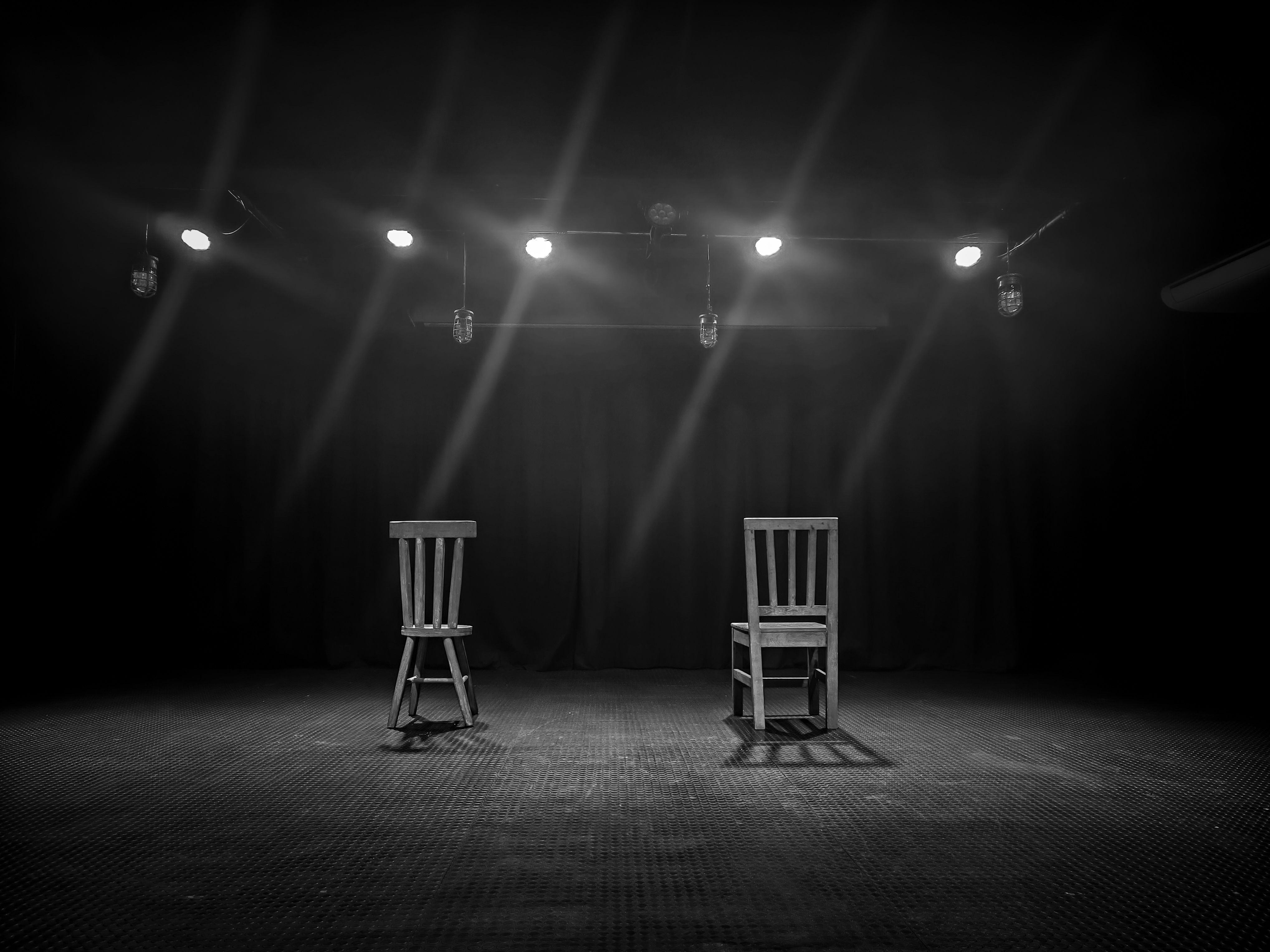
A small budget does not have to mean a bad set.
It does mean you have to design a different way.
One of the easiest traps in school play set design and community theatre set design is starting with a picture of what the show would look like if money, labour and time were unlimited, then spending the rest of the process figuring out which pieces of that picture you can afford to keep.
I think that is backwards.
If I know I am designing a show with a small budget, I want that fact in the room from the beginning. I want to know what the theatre already owns, who is going to build the set, how much time we have, what can realistically change between scenes and where our limited resources will make the biggest difference.
Those are not limitations I deal with after designing the set.
They are part of the design.
And sometimes they lead to a better one.
Don't design the expensive version first
I understand the temptation.
You look at photos from a professional production of the same show and see a gorgeous two-story house with a working staircase, twelve windows, detailed trim, a giant automated wall and scenery that disappears into the floor.
Then you try to make the $800 version of that.
The result can be a set that looks like a cheaper copy of somebody else's expensive set.
I would rather start over.
What does the play actually need the audience to understand?
Maybe it needs a staircase because important scenes happen on two levels. Maybe it needs one great doorway because entrances through it matter. Maybe it needs a strong sense of decay, wealth, confinement or openness.
Those things can become the design.
A low budget theatre set does not need to look like you ran out of money. It can look deliberately simple.
There is a huge difference.
Walk through the theatre's stock before you get attached to anything
This is one of the first things I would do in a school, community theatre or any venue with an existing scene shop.
Go shopping.
Not at a store. In the building.
What is already there?
Look for stock flats, platforms, stairs, doors, windows, furniture, moulding, railings, masking and scenic pieces from previous shows. Look at what is sitting behind other things. Ask the person who has been around for ten years what is hiding in the room nobody opens anymore.
Sometimes the theatre already owns 80 percent of a useful solution.
That does not mean I drag everything out of storage and put it onstage because it is free.
Stock scenery still has to serve the design.
But if the theatre owns a set of useful platforms, that might change how I think about levels. If there are ten matching flats, perhaps they become the basic architecture. If there is a beautiful door unit sitting in storage, maybe I can design around it instead of spending time and money building another one.
This is where designing specifically for the theatre you are in can beat designing an imaginary ideal version of the show.
Stock scenery is not a compromise if you use it intentionally.
Treat labour and time like part of the budget
When people say "budget," they usually mean money.
I think that is only one part of it.
You also have a labour budget and a time budget.
If I have three experienced builders and six weeks, I can design differently than I would for a teacher and eight students working after school for three weeks.
Even if both productions have exactly the same amount of money.
Volunteer labour is not unlimited because it is free. Neither is student labour.
Every wall has to be built, moved, painted, installed and eventually taken apart. Every additional scenic element consumes some amount of the production's available time.
So when I am looking at a design, I am not only asking:
Can we afford this?
I am also asking:
Can we finish this?
That second question matters a lot.
I would rather walk into tech with a simple set that is completely built and beautifully painted than an ambitious one that still has people filling screw holes and attaching trim while actors are waiting to rehearse.
Use a few strong choices instead of a lot of weak ones
This is probably the biggest thing I would change if a design was getting too expensive.
Do less.
Not randomly. Deliberately.
If I have limited resources, I want to concentrate them where the audience will actually notice them.
Maybe the whole design is built around one enormous window.
Maybe it is a strong staircase and a wall that leans at an impossible angle.
Maybe it is three beautifully painted stock flats arranged in a way that creates the entire world.
Maybe most of the stage is open and one piece of furniture carries an enormous amount of visual weight.
A cheap set design for a play does not have to be a collection of cheap things.
It can be a small number of good things.
That also gives scenic paint, lighting, props and costumes some room to work. The set does not have to communicate every single piece of information by itself.
Sometimes taking something away makes the remaining choices feel more important.
Be ruthless about scene changes
Scene changes can quietly eat a small production alive.
A show has six locations, so the first instinct is often to build six sets.
Except you probably cannot.
Then the solution becomes six smaller sets, all of which need to live somewhere backstage, move on and off, be painted, dressed and stored.
Now you have spent your limited resources making six incomplete things.
I would rather ask whether the locations really need completely different scenery.
Could the same architecture serve several scenes?
Can lighting, furniture, props or dressing tell us that the location has changed?
Could one scenic element transform while the rest of the environment stays put?
Could the audience simply understand that we are somewhere else?
Theatre audiences are actually pretty good at this.
If an actor walks onto an empty stage carrying an umbrella and everyone treats it like it is raining, nobody stands up and demands to see a functioning storm cloud.
We are allowed to be theatrical.
That can be especially useful in community theatre set design, where complicated transitions also put pressure on backstage crews who may be working with limited rehearsal time.
Every scene change should earn the effort it requires.
Talk to the person building it before everyone falls in love
This is useful on every production. On a small-budget production, I think it is essential.
Show the design to the person who actually has to build it while the design is still flexible.
Not after the director has approved the beautiful rendering.
Not after everyone has spent a week imagining the finished version.
Before that.
I want the builder to tell me if I have drawn something that is going to consume half the schedule. I want to know if there is a piece of stock I have forgotten about. I want to know if the same visual idea can be achieved in a much simpler way.
That conversation does not diminish the designer's job.
A good builder may look at something I have drawn and say, "I can give you that look much more easily if we do this instead."
Great.
I still get the look.
The production gets a set it can actually finish.
Everybody wins.
Spend your effort where the audience can see it
There is a point in almost every build where I think you need to stop asking what else you can add and start asking what still looks unfinished.
Those are very different questions.
Stand in the house.
Look at the set from where the audience will actually sit.
Can you see raw edges that were never meant to be visible?
Does the masking work?
Are there obvious gaps?
Does a scenic unit that looked fine in the shop suddenly look unfinished under stage lighting?
Does the paint treatment continue around the edge the audience can see?
Are the sightlines doing something unexpected from the side seats?
Does one beautifully finished area sit next to another area that obviously ran out of time?
This is where I would spend the last part of the budget and schedule.
Not on one more decorative object.
On finishing.
A finished low-budget set almost always looks better to me than a bigger set that announces all the places where the production ran out of time.
Paint can do an enormous amount of the visual work
When the architecture has been simplified, scenic treatment becomes even more important.
A flat wall is not necessarily visually boring. It is a surface.
Colour, value, texture, aging and contrast can completely change how the audience reads it.
The important thing is not to treat paint as the thing that happens after construction.
It is part of the design.
If I know I cannot afford a lot of architectural detail, I may deliberately create larger, simpler surfaces because I know the scenic treatment will carry more of the image.
That is different from building something plain and hoping paint somehow saves it later.
The same thinking applies to lighting.
A set is ultimately going to be seen under theatrical light, not the fluorescent fixtures in the shop. A simple scenic shape with strong lighting can have far more presence than a complicated piece that does not photograph well or does not read from the house.
Design for the bad seats too
Small budgets do not make sightlines less important.
In fact, a simpler design gives you even less reason to ignore them.
Walk to the sides of the house.
Sit low.
Sit high.
Look from the seats nobody on the production team normally chooses.
If your one important doorway disappears behind another scenic element for a quarter of the audience, that matters.
If the actors keep getting hidden by the furniture, that matters.
If your carefully dressed corner is only visible from six seats in the centre, maybe that is not where your limited effort should be going.
This is another reason I like a few strong scenic choices on a small-budget show. You can make sure those choices actually work for the room.
Do not save money by becoming casual about safety
This is the part where "we don't have much money" stops being an acceptable explanation.
Scenery still has to be safe.
Platforms still need to support the people using them. Stairs still need to function properly. Scenic units need to be stable. Actors need safe paths through and around the set.
And if the people building the show are students or volunteers, I am even less interested in designing something that assumes skills, tools or experience the crew does not have.
The clever low-budget solution is not the one that gets around doing something safely.
It is the one that removes unnecessary complexity while preserving what the production needs.
If I cannot afford to execute an idea safely, I need another idea.
Know what deserves to be custom
Using stock does not mean everything has to come out of storage.
In fact, stock becomes much more powerful when it frees the production to spend its resources on the things that really matter.
Maybe I use existing platforms and flats for most of the set so the shop has time to build one unusual centrepiece.
Maybe all the furniture is borrowed so the scenic budget can go into one important transformation.
Maybe the basic architecture is extremely simple because the finish is what makes the world distinctive.
That is the balance I am looking for.
I do not want to spread a small budget evenly across twenty things.
I want to know which two or three things deserve it.
A small budget can actually make the design clearer
I am not going to pretend having less money is secretly better.
Sometimes more budget would absolutely make the show easier.
But constraints can force useful decisions.
If I cannot build everything, I have to decide what matters.
If I cannot represent every location literally, I have to find the visual idea connecting them.
If I cannot fill the stage with architecture, I have to think harder about composition, negative space and focus.
That can lead to a set with a stronger point of view.
The goal is not to make the audience say, "Wow, they did a lot with no money."
Ideally, they are not thinking about the budget at all.
They are looking at a set that feels complete, intentional and right for the story.
That is what I am after.
Not the biggest set we can almost finish.
The best set we can actually make.
FAQ
How do you design a set for a play on a small budget?
Start with what the play truly needs and what the theatre already owns. Use stock scenery intentionally, simplify scene changes, concentrate resources on a few strong visual choices and involve the builder early. Design around the money, labour and time you actually have instead of creating an expensive design and cutting pieces until it fits.
How can I make a cheap theatre set look good?
Focus on making a simpler design feel finished. Strong composition, thoughtful scenic paint, clean visible edges, good sightlines and a few deliberate focal points usually do more for the audience than adding more scenery. A small set that looks intentional will generally read better than an ambitious one that looks unfinished.
What should I reuse for a school play or community theatre set?
Start by looking at the theatre's existing stock flats, platforms, stairs, doors, windows, furniture and other reusable scenery. Use stock when it supports the design, then put the available build time and budget into the elements that need to be distinctive for this particular production.
The wider process, from script to drawings, is here: How to Design a Theatre Set.